Why your mini split makes noise in a New Jersey winter
Describe your mini split job once, to one pro.
Cold nights in New Jersey are when you notice the noise most. A mini split that clicks, buzzes, or rattles once the heat kicks on is telling you something inside it is working harder than it should, or working wrong. A clicking sound as it starts or stops is often just the casing expanding with the temperature change, but a buzz from the outdoor unit, a rattle that wasn't there last winter, or a noise that gets worse the longer it runs points to a loose part, ice buildup, or a fan that's struggling.
Most houses here heat with gas, so a mini split is usually doing extra duty, not carrying the whole house. That makes it easy to put off a strange noise since the furnace is still running fine. But a mini split working against a failing part pulls more power to do the same job, and with New Jersey electric rates among the highest in the country, that difference shows up on the bill long before the unit quits outright.
Finding someone who actually knows mini splits, rather than a general HVAC outfit that mostly does furnaces and central air, usually means a string of calls: explaining the noise to one company after another, waiting on quotes, trying to figure out who's telling you the truth about what's wrong. That part ends here. Tell us what you're hearing and when it happens, and you'll be matched with a local contractor who works on mini splits all winter in this climate and has a good sense of what that particular sound usually means before they even get to your house.
One contractor, not five companies calling you back at once. Someone who knows the equipment and knows New Jersey winters, ready to take a look.
Why does my mini split make noise when it's cold out in New Jersey?
Cold snaps make the noise worse, and that's usually when people call. You hear the clicking or buzzing most on the nights the heat has to work hardest, and it's fair to wonder if that means something is actually wrong, or if a mini split is just supposed to sound like this once the temperature drops.
Most of the noise is normal strain, but not all of it
A mini split pulls heat from outside air even when it's cold, and the colder it gets, the harder the outdoor unit works to do that. That extra load shows up as sound: the compressor runs longer, the fan moves more air, and parts expand and contract as they heat up and cool down. A clicking at startup or shutdown is usually just that. But a new buzz, a rattle that wasn't there last winter, or grinding means a part is loose, failing, or iced over wrong. On the coldest nights here, when the system runs close to nonstop, a problem that was minor in fall can turn into one that leaves you without heat.
1
The thermostat calls for heat and the compressor starts up
2
Refrigerant lines expand as hot gas moves through them
3
The reversing valve shifts, which can click or clunk once
4
The outdoor fan ramps up speed as the compressor load grows
The pro who reaches out is licensed in New Jersey.
There's no charge for the request.
Running the way it should
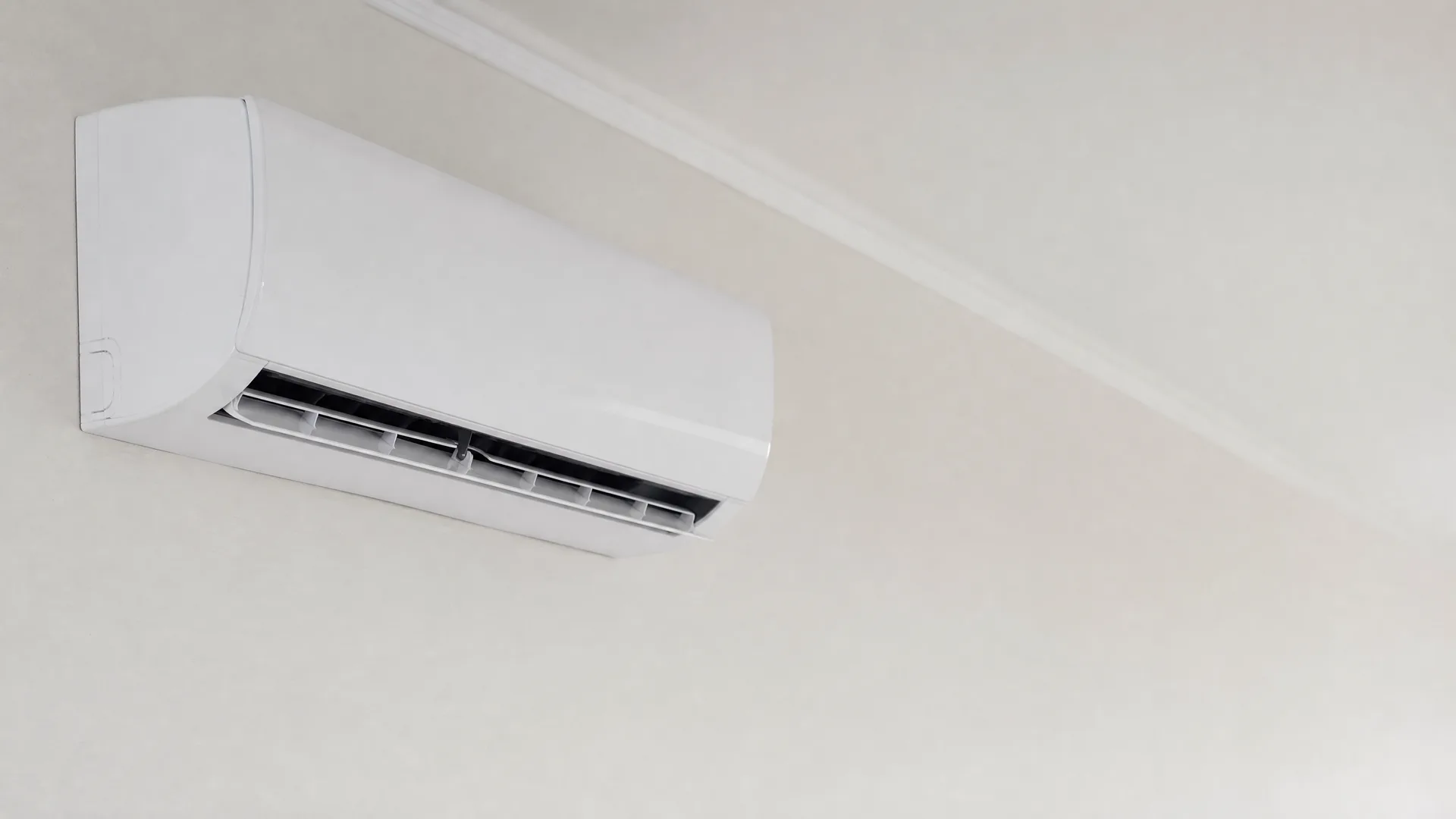
A quiet start, a steady hum, warm air moving across the room. The vane opens smooth and the indicator panel stays dark unless you're checking it. No clicking past the first minute, no rattle when the compressor cycles on a cold night. This is what a mini split sounds like when nothing inside it is fighting itself.
Working harder than it should
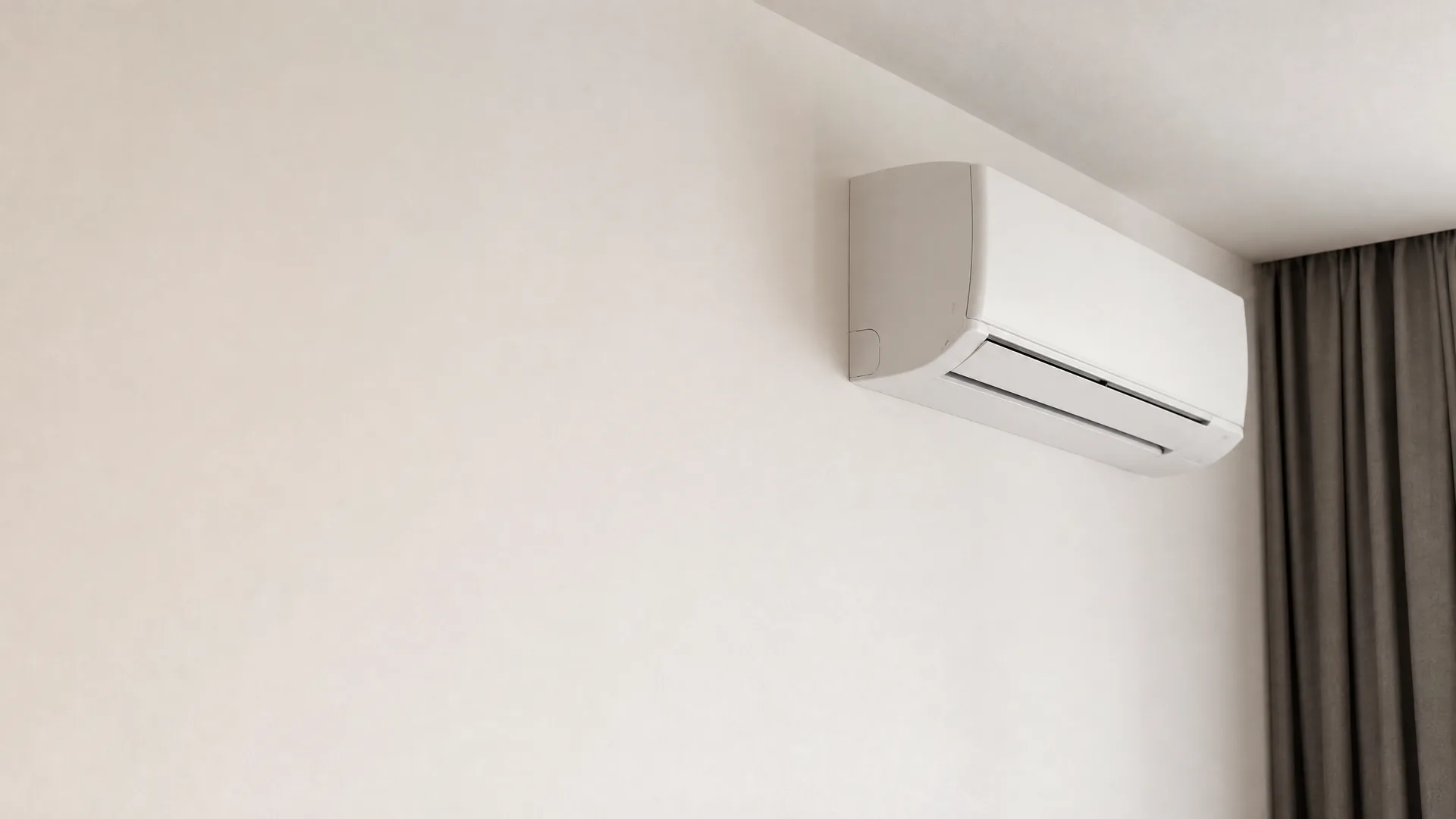
Dust and grime built up on the housing usually means the filter behind it is just as dirty, which makes the unit strain to push air through on the coldest nights. A vane that hangs open instead of closing tight lets warm air leak back out. Noise and a dirty coil often show up together.
Normal Sound or a Problem
Noise that's normal
A soft clunk from the reversing valve as it shifts, once, right when the cycle starts or ends.
A ramp-up hum from the outdoor fan as it speeds up to meet a cold snap, then it settles.
A trickling sound in the lines as refrigerant moves and the metal warms, especially on the coldest mornings.
A faint click when the thermostat first calls for heat, gone within a second or two.
Occasional light frost noise or a brief defrost cycle hum on nights near freezing.
Noise that means a problem
A rattle that keeps going the whole time the unit runs, not just at startup or shutdown.
Buzzing that gets louder as the night gets colder instead of staying steady.
Clicking that repeats every few minutes instead of once per cycle.
A grinding or scraping sound from the outdoor fan, which usually means a bent blade or worn bearing.
A hissing sound along the line set, which can point to a refrigerant leak.
Any noise paired with weak heat, ice buildup on the outdoor unit, or the system short cycling.
Defrost cycles bring their own noise
Below freezing, the outdoor unit ices up and has to clear itself. The system reverses briefly, sends warm refrigerant through the outdoor coil, and melts the frost off. You might hear a whoosh or a change in the fan pitch for a few minutes, then it switches back to heating. This happens on its own on cold nights and isn't something the thermostat setting controls.
The outdoor unit works for you
New Jersey winters push the outdoor unit harder than summer does, since it has to pull heat out of air that might be in the 20s or low 30s. The compressor runs longer and the fan spins faster to move enough air across the coil. More load means more sound. A unit that's sized right and set up on a stable, well drained pad should still settle into that steady hum once it's running.
Power costs 22.48 cents per kilowatt-hour statewide
A noisy mini split pulling extra amperage to force heat on a cold night costs more here than almost anywhere else, since New Jersey power runs 22.48 cents per kilowatt-hour. A compressor straining against a bad part isn't just loud, it's running up your bill while it struggles.
EIA-861 2025 statewide residential average
A soft clunk when the cycle starts is normal. A grinding, screeching, or banging sound is not, and on a cold night it usually means a part is already failing rather than just working hard. Ice that won't clear after a defrost cycle points the same way. You don't need to know which part it is before you call. A contractor who works on mini splits all winter in New Jersey has heard these same sounds on plenty of other systems and knows what tends to fail when the temperature drops. You'll be matched with one licensed, local contractor, not a handful of companies competing for your callback, so there's no sorting through quotes or explaining the noise over and over to different people. Someone who already knows this equipment takes it from here.
Skip the search
Only one pro gets your request, so you hear from one company.