Profile view of a bearded man wearing a dark green baseball cap and a dark gray T-shirt against a plain light background.

Why your mini split has ice on it in a New Jersey winter

Step 1 of 3: Equipment

That ice on your outdoor unit is normal frost at first, and it's part of how a mini split heats your home in a New Jersey winter. The outdoor unit pulls heat out of cold air, and that process chills its coil below freezing, so moisture in the air lands on it as frost. Every heat pump does this on cold, damp days. The fix is built in: the system runs a defrost cycle every so often, reversing itself for a few minutes to melt that frost off before going back to heating. You'll see steam or water during this, and that's expected too. The problem starts when the ice doesn't clear between defrost cycles, or when it builds up thick and solid instead of a light coating. That points to something keeping the coil too cold or blocking airflow, and it means the unit needs a look before it has to work harder than it should on the coldest nights.

A woman in a cream cowl-neck sweater sits by a window with snow outside, in a dimly lit living room with a sofa, lit lamp, mirror, candles and a fireplace.
A woman in a gray turtleneck sweater sits beside a large window looking out at snow-covered evergreen trees, in a dimly lit living room with a lit fireplace, lamps, couch and houseplant.
A woman in a cream turtleneck sweater stands beside a large window with snow-covered ground and bare trees outside, in a dimly lit living room with lamps, a sofa and framed art.
A woman in a grey cowl-neck sweater stands indoors near a window, looking out at falling snow, with a lamp, framed picture and couch in the warmly lit room behind her.

Your mini split handles frost on its own. Every so often, when it's cold enough outside, the system briefly reverses itself and runs like an air conditioner for a few minutes. That sends warm refrigerant out to the coil and melts the frost off. You might hear the outdoor fan stop, or see a bit of steam drift off the unit. That's the defrost cycle working, not a malfunction. When it's cold out, this happens roughly every forty five minutes to an hour, and then the system switches back to heating your house like nothing happened.

The trouble starts when that cycle can't finish the job. If ice is still there after a defrost cycle runs, or if it's crept past the coil and covered the whole outdoor unit, something's keeping the system from clearing itself. A coil caked with dirt, a refrigerant charge that's run low, or a defrost sensor that's stopped reporting the right temperature can all get in the way. So can a fan that's iced over or stopped turning when it should be spinning. None of those fix themselves.

How defrost is supposed to work

  • Every mini split runs a defrost cycle that reverses the system for a few minutes to melt that coil frost back off.
  • During defrost the outdoor fan stops and the unit may send out a puff of steam or sound like it's blowing warm air outside, which is normal.
  • A healthy system defrosts on its own every forty five minutes to an hour when it's cold out, then goes back to heating your house.
  • Ice that stays put through a defrost cycle, or builds up the whole unit instead of just the coil, means the cycle isn't finishing the job.
  • A dirty outdoor coil, a low refrigerant charge, or a failed defrost sensor can all keep the ice from clearing the way it should.
  • A fan that's iced over or not spinning during defrost is a sign the system is stuck rather than cycling normally.
A wall-mounted mini-split air conditioner indoor unit with a dusty off-white casing and dark lower vent, installed high on a plain light-colored wall below a ceiling molding.
Before you get your mini split repair
A white wall-mounted mini-split air conditioner installed high on a beige interior wall below crown molding, with a window and light curtain on a black rod at right.
After you get your mini split repair

When frost means defrost is working

A thin, even coat of frost that shows up and then disappears within half an hour is the defrost cycle doing its job. It comes and goes a few times a day when it's cold out, and the unit keeps heating your house through it. You might notice the outdoor fan pause or hear a brief change in sound. None of that means anything is wrong. It only becomes a problem if the frost keeps building instead of melting off, or if it spreads past the coil onto the pipes and the cabinet.


When ice points to a real fault

Ice that's thick, that forms in chunks instead of a thin coat, or that stays on the unit for hours is not a normal defrost cycle. That kind of buildup usually means the system can't clear the frost on its own, which points to a problem with the refrigerant charge, the defrost control board, or a sensor that isn't telling the unit when to switch over. Left alone, the ice keeps the coil from pulling heat out of the air, so your mini split works harder and heats your home less. That's when it needs a technician, not time.

A bearded man in a plaid flannel shirt stands in a kitchen looking out a window toward snow-covered shrubs, with a steaming mug on the windowsill and potted plants on a shelf behind him.
A smiling man with dark curly hair in a navy t-shirt sits on a gray couch indoors, with a large-leafed plant and a window in the background.
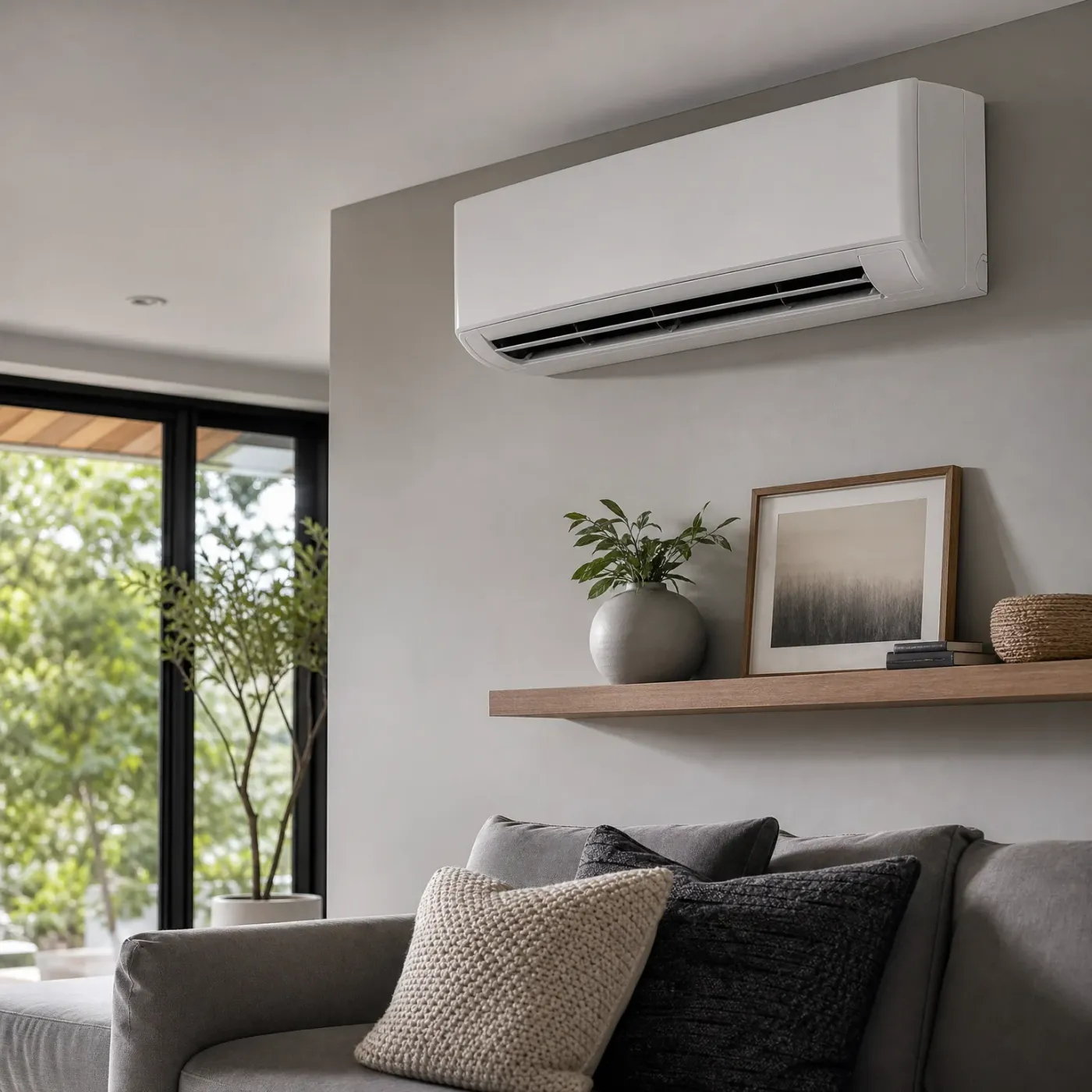
A white wall-mounted mini-split air conditioner near the ceiling of a living room with a gray sofa, knit cushions, a wooden floating shelf holding a plant in a round vase, a framed print and a woven basket, and a large window showing green trees.

A mini split pro near you

Send the request today and stop worrying about who to call.

A local pro who knows mini splits gets your details and gets in touch.

Get my match

It costs nothing to send, and you don't have to hire anyone.

Power costs 22.48 cents per kilowatt-hour statewide

When a mini split can't defrost itself, it leans on backup electric heat strips to keep your rooms warm, and at 22.48 cents per kilowatt-hour, a unit stuck doing that runs up your bill fast. A repair that gets defrost working right again is what keeps that cost off your statement.

EIA-861 2025 statewide residential average

A dim room with a wall-mounted mini-split air conditioner above a faint vertical stain running down the wall, a folded grey towel on the wood floor at the baseboard, and a desk with monitor, lamp, small plant and office chair by a window.

You're at your desk on a July afternoon, the window unit in the next room humming, when you notice the carpet under your mini split feels damp. You look up and see it: a wet streak running down the wall, starting right under the indoor unit and soaking into the drywall. You grab a towel from the bathroom and lay it on the floor, then stand there looking at the line of water like it might tell you something. The air coming off the unit still feels cool. Outside, New Jersey's sticky summer heat presses against the windows, and you're trying to remember if you noticed this yesterday.

A white wall-mounted mini-split air conditioner installed high on a beige interior wall near the ceiling, with a white-framed window at the left edge.
Clean coils, a clear filter, and frost that melts off on its own within the hour.
A dusty, stained wall-mounted mini-split air conditioner indoor unit near the ceiling on a plain beige wall, with visible lint buildup at its intake grille.
Grime and mold like this block airflow, so the coil stays cold and ice keeps building instead of clearing.
A two-story house with gray and light gray siding, white-trimmed windows and a white front door, flanked by deciduous trees, with a partly browned lawn in front under a clear blue sky.

Summers here run sticky, and the dew point averages 63°F across June, July and August, a figure that tracks how much moisture is actually in the air, not just the temperature. That's the kind of air your mini split's indoor coil has to pull moisture out of nonstop, all summer. Come winter, that coil is doing the opposite job, pulling heat out of cold air, and the same unit that spent months wringing out humidity now has to shed frost instead of absorb it. A unit that ran hard all summer without its coil cleaned or its filter checked goes into winter already behind, and frost has an easier time building up on a dirty coil than a clean one.

NASA POWER T2MDEW county cells weighted by homes

Is the ice on your unit actually melting off?

Watch your outdoor unit for an hour on a cold day. If the frost comes and goes, that's normal. If it's still there the next morning, thicker than the day before, something's wrong. You might notice the indoor unit blowing cool air instead of warm, even with the thermostat turned up. You might hear it running constantly, never shutting off the way it used to. Check your electric bill against last winter's too. A mini split that can't defrost itself falls back on electric heat strips to keep your rooms warm, and those run up your bill fast at New Jersey power rates. Left alone, a coil that stays iced over can crack, and water from the melt can end up somewhere in your house it shouldn't.

A white wall-mounted mini-split air conditioner installed high on a plain light-colored interior wall near a corner, with a window frame at the left edge.

Ice that keeps building

A coil that stays white or gray and gets thicker by the hour isn't defrosting. You might see ice creep onto the refrigerant lines running to the wall, or notice the indoor unit blowing cool air instead of warm. Left alone, that ice packs in around the coil and fan blade, and the system works harder to move less heat. By morning you may find a solid shell instead of the thin coat that should have cleared overnight.

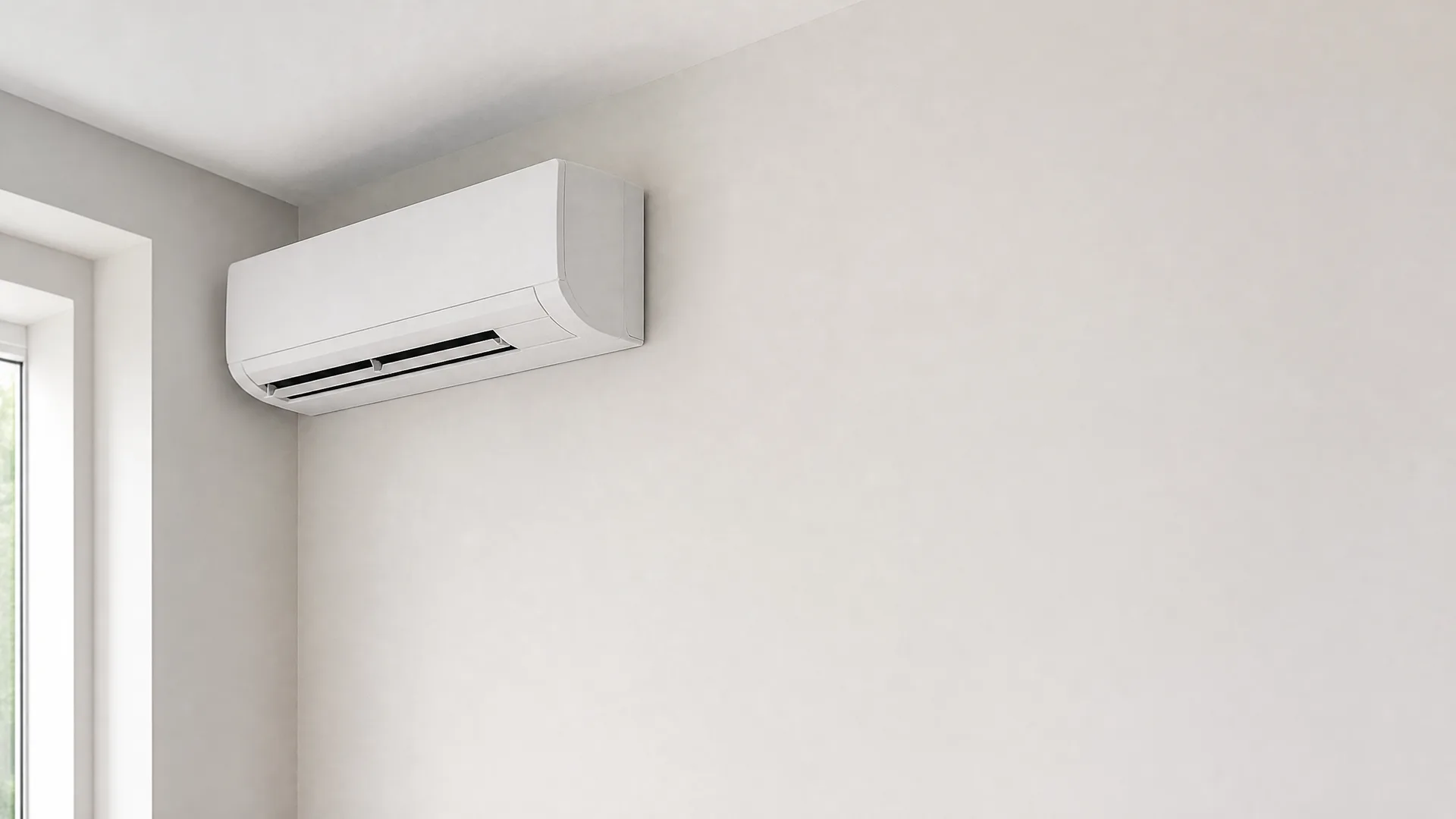
A white wall-mounted mini-split air conditioner installed near the top of an interior corner wall, with large blank light-colored wall space to the left.

A quick check before it spreads

A mini split that can still cycle out of defrost on its own usually just needs time and a cold snap to pass. One that can't is worth a look now, while it's a sensor, a drain line, or a low refrigerant charge, not a cracked coil or a seized fan motor. New Jersey winters give a mini split a lot of chances to defrost. A unit that keeps failing at it isn't going to fix itself before spring.

A woman in a cream sweater and jeans stands in the open doorway of a white stucco house, holding the dark door, while a man in a dark quilted jacket seen from behind walks toward the entry past potted plants.

Frost that melts on its own is fine. Ice that stays is not.

A mini split in New Jersey will frost up some mornings all winter. That's the defrost cycle doing its job. The difference between that and a real problem comes down to what the ice does over the next hour: clears on its own, or sits there getting thicker. If your outdoor unit still has ice on it tomorrow morning, or the indoor unit is blowing cold air instead of warm, the defrost cycle has stopped working the way it should.

Once you've watched it and you know which one you're looking at, you don't have to figure out the rest on your own. A page like this can match you with a contractor who handles mini split repair in your area, and they'll reach out to you directly. No more searching for who to call or whether they're any good at this particular unit. That part of the job is off your plate once you send the form.

Interior corner with a beige sofa holding a dark green and a light cushion and a textured throw, a potted small-leaved tree beside a white-framed window, and a dark shallow bowl on a wooden coffee table in the foreground.
A sunlit room corner with cream walls, white baseboard and window sill molding, a wood floor, and a dark wooden cabinet on the right holding a pale vase with leafy branches below a framed picture.
A round woven basket with a cream fringed throw draped over its rim sits in a corner on a wood floor, beside a dark wooden cabinet holding a stone vessel, with sunlight from a nearby window on the beige walls.
Interior corner of a room with a white-trimmed window and sill, beige walls, white baseboard molding, and a wood floor with sunlight falling across it; green foliage is blurred outside the window.
Interior corner of a room with cream walls, white baseboard molding, a window with a white sill showing blurred green foliage outside, and a wood plank floor lit by sunlight.
Sunlit interior corner showing a beige wall with a small crack above white baseboard molding, wood plank flooring, a patterned rug edge at lower left, and a window with sill at upper left.

A local pro for your mini split repair

Send the request and finding a pro stops being your problem.

Request a pro

No charge to send it. You decide if you hire them.