Tell us about the job
Takes about a minute. No obligation.
For a mini-split, the compressor and condenser fan are the components taking the hit, and both do all their work in a compressed stretch of the calendar. Homes in Essex County, NJ run cooling about three months a year, from June through August. The contactor closes and opens every time the unit cycles, and a short cooling season means every start and stop is packed into those same weeks. A contractor diagnosing a refrigerant or compressor fault here checks how many cycles that contactor has logged, because the wear pattern on a unit that runs hard then sits idle differs from one that runs steadily. Coil condition matters too, since a unit that stands off most of the year can accumulate debris before anyone notices a problem.
Stock built for gas furnaces and window units gets retrofitted, and what lives inside a wall-mounted head or a line set that has been working in those conditions for years is not visible from the outside. Half the homes in Essex County, New Jersey were built in 1958 or earlier (2020-2024 ACS 5-year). A contractor who opens a mini-split in a house from that era finds coil condition, refrigerant charge, and drain line state shaped by a building envelope that was never spec'd around it. Parts availability follows from what the system actually is once it is open, and that is what sets the bill.
The Parts of a Mini-split a Contractor Checks First
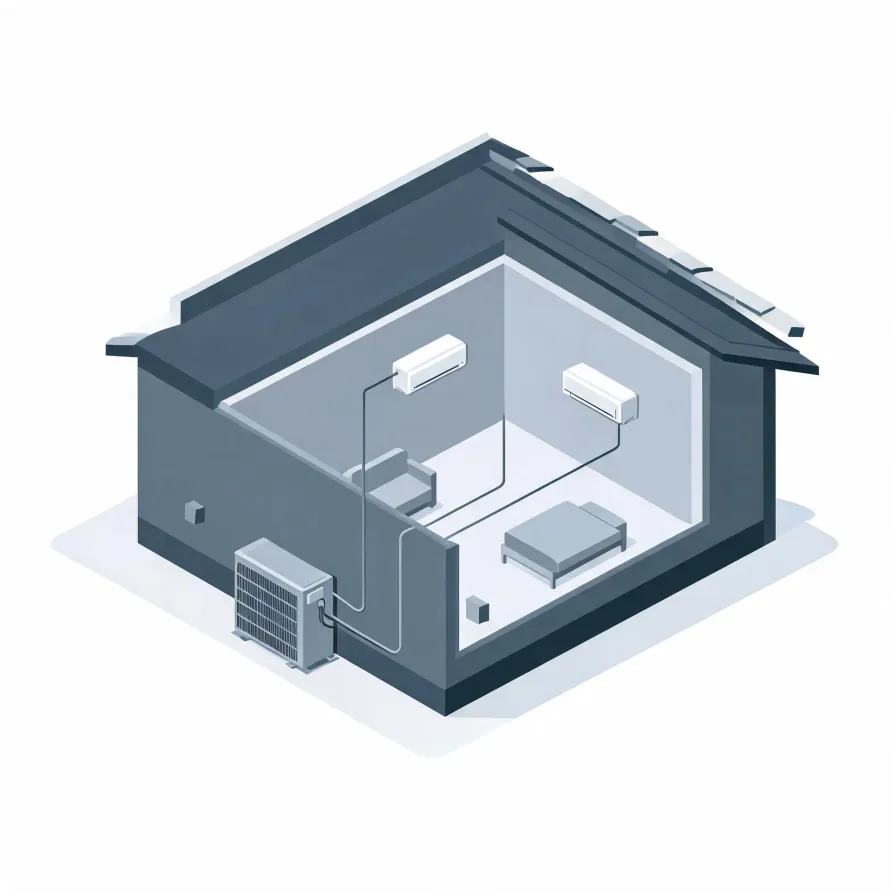
The indoor air handler mounts high on a wall inside the room and pushes conditioned air directly into that space. A contractor working a repair call starts here, pulling the cover to check the evaporator coil, the fan wheel, and the sensors that tell the unit what to do. When the air handler is the problem, symptoms show up fast: weak airflow, icing on the coil, or a unit that short-cycles.
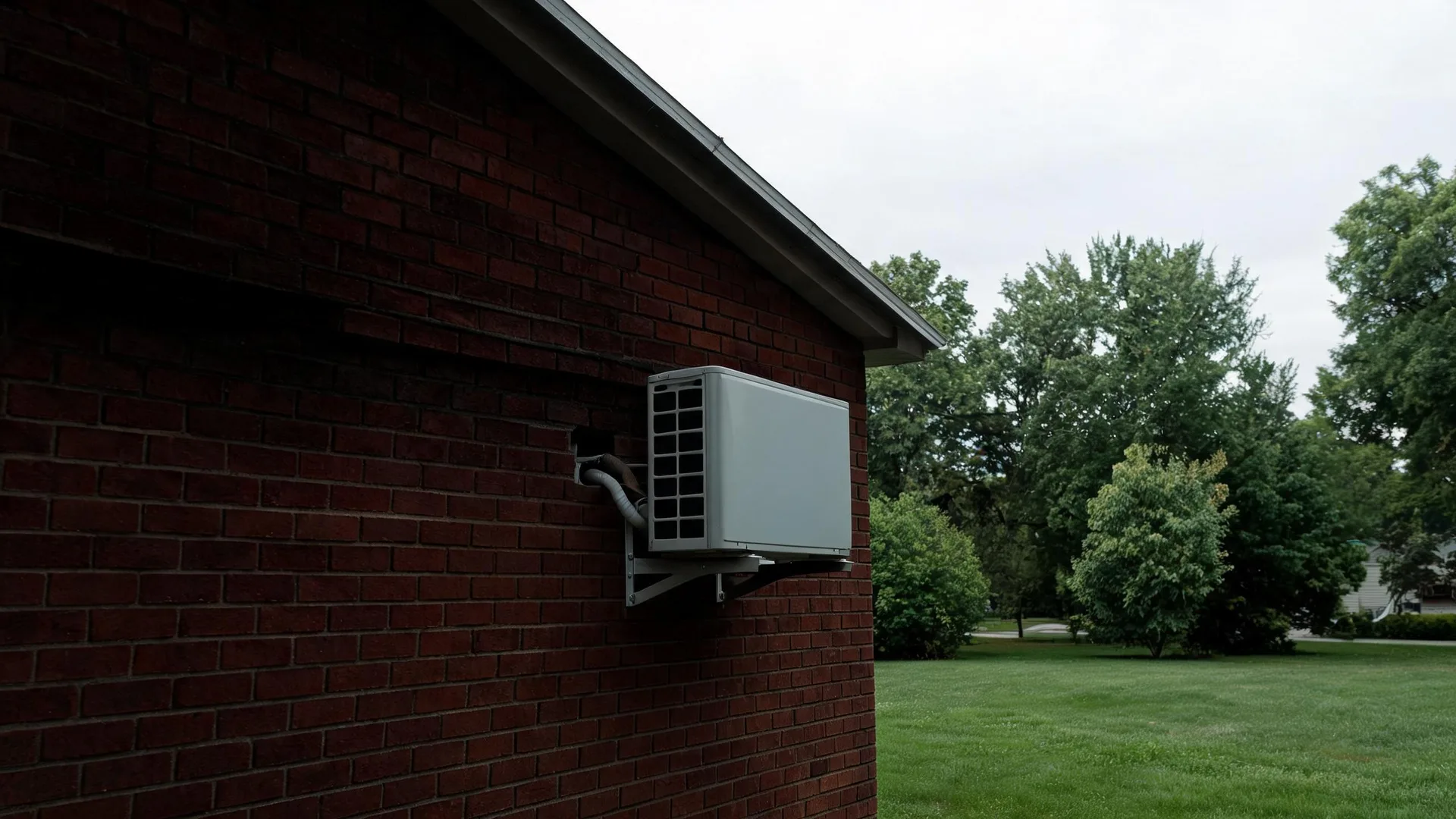
The outdoor condenser sits on a pad or bracket outside the house and holds the compressor, the condenser coil, and the fan that sheds heat to the open air. Running between the two units, the refrigerant lines and the communication wiring pass through a small hole in the wall. A fault anywhere in that connection, or in the condenser itself, can produce the same symptoms as a failed indoor unit, which is why a contractor checks both ends.
The drawing shows the general layout of a mini-split system, and a licensed contractor determines which components and conditions apply to your specific home.
Get matched in Essex CountyEssex County, by the numbers
102 severe weather events were recorded in Essex County, New Jersey between 2015 and 2024.
NOAA National Centers for Environmental Information, Storm Events Database, bulk CSV export, events 2015-01-01 through 2024-12-31.Half the homes in Essex County, New Jersey were built in 1958 or earlier (2020-2024 ACS 5-year).
U.S. Census Bureau, 2020-2024 American Community Survey 5-Year EstimatesEssex County, New Jersey holds 336,962 housing units (2020-2024 ACS 5-year).
U.S. Census Bureau, 2020-2024 American Community Survey 5-Year EstimatesOwners occupy 44.9% of the occupied homes in Essex County, New Jersey (2020-2024 ACS 5-year).
U.S. Census Bureau, 2020-2024 American Community Survey 5-Year EstimatesCodes & Standards Governing Mini-Split Repair in Essex County, New Jersey2 sourced rules & standards
What Essex County and New Jersey Require for This Work
In New Jersey the HVACR licence is the State's alone: a municipality, local board of health or any other agency may not issue or renew a Master HVACR contractor's licence.
New Jersey requires a Master HVACR contractor licence: no person or business may engage in the business of HVACR contracting, or advertise as a Master HVACR contractor, without being authorised under the State HVACR Contracting License Law.
Severe Weather Events in Essex County
Weather in Essex County puts real load on heating and cooling equipment, and that load accumulates over time. A mini-split running hard through harsh conditions wears differently than one that rarely does, which is what makes local weather history relevant to repair work here.
102 severe weather events, 2015–2024. Source: NOAA National Centers for Environmental Information, Storm Events Database.