







Is a cold-climate mini split worth it in New Jersey

A local installer who puts in mini splits gets your project.

Connect with a pro

Is a cold-climate mini split actually worth it in New Jersey?

You already have a mini split, but you went with the cold-climate version, and you want to know if that was the right call or if you paid for something you didn't need. New Jersey winters get cold enough that a regular heat pump struggles, and most homes here lean on gas for heat anyway, so it's fair to wonder if the mini split is doing real work or just handling the shoulder seasons while gas carries the cold months.

Yes, if it's heating through the cold months, not just spring and fall

A cold-climate mini split keeps producing heat down into single-digit outdoor temperatures, where a standard heat pump loses most of its output and starts leaning on backup heat or shutting down. New Jersey winters get into that range most years, so the cold-climate compressor is what lets the unit keep running instead of idling until spring. Summers here get sticky too, and the same unit handles that side without any change in equipment. Power here costs more than in most states, so a mini split that actually carries the winter load, instead of handing off to electric resistance heat, is worth more to you here than it would be somewhere milder. If yours only runs in the shoulder months with gas taking over below freezing, you're paying for cold-climate capability you're not using.

An older woman with gray hair in a cream knit sweater sits under a blanket on a sofa by a window, looking outside toward yellow-leaved trees, with a lamp, shelves and an armchair in the room behind her.
A gray-haired woman in a chunky knit sweater sits in an armchair with a blanket, looking out a window at yellow autumn foliage, with bookshelves and a potted plant behind her.
A gray-haired woman in a navy sweater sits in an armchair with a knit blanket beside a window, looking out at yellow autumn foliage, with a dining table and houseplant in the room behind her.
A gray-haired woman in a gray cowl-neck sweater sits in an armchair with a blanket, looking out a dark-framed window toward yellow autumn trees.

How Cold-Climate Mini Splits Hold Up

  • A cold-climate mini split keeps a compressor running efficiently down into single digits instead of switching to electric resistance heat.
  • Below about 5 degrees, a standard heat pump loses most of its heating capacity, while the cold-climate version holds onto more of it.
  • The difference comes from a vapor injection compressor that pulls in extra refrigerant partway through the cycle to keep output steady when it's cold out.
  • Most gas furnaces in New Jersey still run the backup heat strip, so a cold-climate unit cuts how often that expensive backup kicks in.
  • The outdoor unit also defrosts less often in freezing, damp weather, which matters on the gray days New Jersey gets most winters.
  • A standard mini split can still heat a room on a mild January day, but it struggles once temperatures drop into the teens or lower.

A standard heat pump and a cold-climate one look the same on the wall. The difference is inside the outdoor unit, in the compressor. A regular compressor pulls in refrigerant once per cycle. A cold-climate compressor uses vapor injection, which adds a second shot of refrigerant partway through, so it can keep moving heat into the house even as the outdoor air gets thin on heat to grab. That's why a standard unit's output falls off fast once it's cold out, while a cold-climate unit keeps more of its rated capacity down into single digit temperatures. Below that, most systems start leaning on backup heat. If your home heats with gas, that backup is usually the furnace itself kicking on alongside the mini split. A cold-climate unit needs that backup less often, because it's still doing real work at temperatures that would have a standard unit mostly coasting. There's a second piece most people don't think about: defrosting. Outdoor units ice up in cold, damp air and have to pause heating to melt it off periodically. Cold-climate units are built to manage this more efficiently, which matters on the raw, gray days New Jersey gets most winters, not just the clear cold snaps. None of this shows up unless the outside temperature actually drops. On a mild January afternoon, a standard mini split keeps up fine. It's January nights and February cold snaps where the cold-climate compressor earns its keep.

A white wall-mounted mini-split air conditioner unit installed high on a beige interior wall below white crown molding, with a window and woven shade at the left edge showing green foliage outside.
Set to heat on a January morning, it still pulls warm air out at low temperatures instead of falling back on backup heat strips.
A dusty, stained white wall-mounted mini-split air conditioner indoor unit installed high on a plain off-white interior wall near the ceiling.
Left without a yearly check, the coil gets caked with dust and the compressor works harder on every cold night this winter.

Picture the coldest morning you had last January, the kind where the car won't warm up right away. A standard heat pump would have given up well before that point and switched over to electric resistance heat, and on New Jersey power rates that's an expensive way to stay warm. The cold-climate version you have kept pulling heat out of that same cold air instead. If your home heats with gas otherwise, the mini split is likely covering one room or one zone, and this is what you paid extra for when you chose it: the difference between that zone staying warm on the compressor alone and that zone quietly switching to strip heat every time the temperature drops. You won't see it on the unit. You'll see it on the bill, and you'll feel it in whether that room actually stays warm during the nights gas furnaces elsewhere in the house are working hardest too.

Power costs 22.48 cents per kilowatt-hour statewide

At 22.48 cents a kilowatt-hour, every hour your mini split leans on backup resistance heat instead of the compressor shows up bigger on your bill. That's the real payoff of the cold-climate version: it keeps pulling heat from outside air on the nights a standard unit would give up and start drawing straight current.

EIA-861 2025 statewide residential average

A white wall-mounted mini-split air conditioner on a beige interior wall, with a window at left showing trees and a wooden fence, and dark wood flooring below.

Running clean

This is what a mini split does on a cold night when it's keeping up: quiet, steady air out of the wall unit, no backup heat strips kicking in. The coil underneath is clear, so the compressor isn't fighting anything to get that heat outside into your room.


A white wall-mounted mini-split air conditioner indoor unit with dark louvered vents, installed near the ceiling on a beige wall below white crown molding.

Running dirty

A coil like this one has been through a few winters without a cleaning. Dust on the coil cuts how much heat it can pull from the outdoor air, so the compressor runs longer to make up the difference, and on a cold snap it leans on backup heat sooner than it should.

A white wall-mounted mini-split air conditioner indoor unit with visible dust and staining along its lower vent, installed on a plain pale wall.
Before you get your mini split installation
A white wall-mounted mini-split indoor unit installed high on a gray interior wall, with a window at left and part of a light gray sofa with a dark cushion at lower right.
After you get your mini split installation
A two-story cream-colored house with horizontal siding and a gray hipped roof, flanked by large green trees and shrubs, with a concrete walkway crossing a lawn to a wet street in the foreground.

That cold-climate compressor earns its keep in January, but it's doing different work by July. New Jersey summer air carries a dew point around 63°F, heavy enough that your skin feels damp even sitting still. A mini split has to pull that moisture out of the air before the room feels comfortable, not just drop the temperature on the thermostat. That's steady work on the coil all summer, and a coil that's dirty or low on charge struggles to keep up on the muggiest days. A local contractor who services these units through a full New Jersey summer, not just the cold months, knows which coils tend to clog first and checks that before it costs you a sticky August.

NASA POWER T2MDEW county cells weighted by homes

Get your mini split to the right pro

You already know the cold-climate compressor is doing real work on the nights a standard one would have quit and switched to resistance heat. What you're deciding now is who checks it. A unit that's holding up against single digits all winter and pulling 63 degree dew points out of the air all summer is running harder than most systems in this state ever have to. That coil needs to stay clean and that refrigerant charge needs to stay correct, or the compressor starts working for nothing on both ends of the year. New Jersey has plenty of contractors who've never serviced a cold-climate system, since most homes here still heat with gas and never needed one. A contractor who works on these every season knows what tends to fail first on this equipment and what a bad reading actually means on a unit built to run at 5 degrees. Getting matched with one who already knows this system, instead of one learning on your unit, is worth doing before next winter tests it again.

  1. Indoor sensor reads room temperature and signals the outdoor unit

  2. Variable-speed compressor adjusts output to match the load

  3. Refrigerant pulls heat from outside air even in deep cold

  4. A base pan heater keeps ice from blocking the outdoor coil

Why does the upstairs unit sound like it's working harder lately

Listen to it on a cold night. A cold-climate mini split that's running right stays fairly quiet even when it's cold outside, because the compressor is doing steady work instead of straining. If yours has started running longer, cycling more, or you're hearing a rattle or a hum that wasn't there before, that's worth paying attention to. A base pan heater that's failed will let ice build up under the outdoor unit, and a dirty coil makes the compressor push harder for the same heat on every one of these cold nights. Left alone through the rest of winter, that strain is what turns into a bigger repair, and in the meantime you're paying New Jersey power rates for heat you're not fully getting.

A woman in a cream knit sweater sits in an armchair with her eyes closed near a window showing yellow autumn foliage, with a mug on a round wooden side table beside her.
A gray-haired man with a beard in a blue button-placket shirt reclines on a couch with his eyes closed, beside a sunlit window with a green plant.

Gas Furnace or Mini Split This Winter

Keep running on gas heat alone

  • Your gas furnace still does the work on the coldest nights, so the mini split's low-temperature capacity goes unused most of the winter.
  • You're paying for gas on every heating cycle, and New Jersey gas rates move independently of what you'd save running the mini split instead.
  • The ductwork and furnace still need their own yearly service, so you're maintaining two heating systems instead of leaning on one.
  • Humidity control in July still falls to the mini split alone, since the furnace has nothing to do with summer comfort.
  • If the furnace is getting old, you're carrying the risk of a mid-winter breakdown with a backup system you're not using to its full range.

Let the mini split carry the cold

  • The compressor keeps pulling heat from outside air well below freezing, so it can take on more of the load the furnace used to carry alone.
  • Every hour it runs instead of the furnace is an hour you're not buying gas for that zone of the house.
  • It's already doing the harder job in July pulling moisture out of sticky air, so running it more in winter doesn't ask anything new of it.
  • A single unit covering both seasons means one system to keep an eye on instead of splitting attention between a furnace and a mini split.
  • Pushing it harder in deep cold means the yearly check matters more, since a dirty coil or weak refrigerant charge shows up fastest when it's working hardest.
A white wall-mounted mini-split air conditioner installed high on a light gray interior wall below a white crown molding and ceiling with a recessed light.

Running clear

This is a mini split pulling its weight: casing clean, vents open, air moving steady out of the wall unit. Nothing rattling, no ice creeping up the side panel. A unit that looks like this is getting checked every year, coil and all, before the cold sets in.

A dusty, discolored white wall-mounted mini-split air conditioner unit installed on a plain beige interior wall below a molding strip.

Neglected and strained

Dust and yellowing on the casing usually mean the inside isn't much better off. A coil caked with grime makes the compressor work harder to pull the same heat out of January air, and that's exactly the temperature range you bought the cold-climate version to handle well.

A woman stands in the open black front door of a white-sided house with a dark shingled roof while a man in a navy jacket approaches along the walkway, with lantern wall lights, a potted shrub, and flowering garden beds nearby.

So was the cold-climate version worth it

Yes. You paid for a compressor that keeps working on the nights a standard heat pump would have quit and switched to resistance heat, and New Jersey gets enough of those nights to use it. It earns its keep again in July, pulling the damp out of the air on the days your gas furnace sits idle and the mini split is the only thing running. You didn't buy capacity you don't need. You bought the version built for both ends of the year you actually have here.

What it needs now is someone who keeps it running that way. A coil that's caked or a unit that's never been checked pushes the compressor harder on both the cold nights and the muggy days, and that shows up on a power bill that's already among the highest in the country. A local contractor who works on these units every season knows what tends to fail first in a New Jersey winter and what a July inspection should catch before August. Get matched with one, and that's who reaches out to you, not a handful of companies competing for the call.

Interior corner of a dining room with a round wooden table, a ceramic vase holding olive branches, a dark spindle-back chair near a curtained window, and a sideboard with a lamp against beige walls.
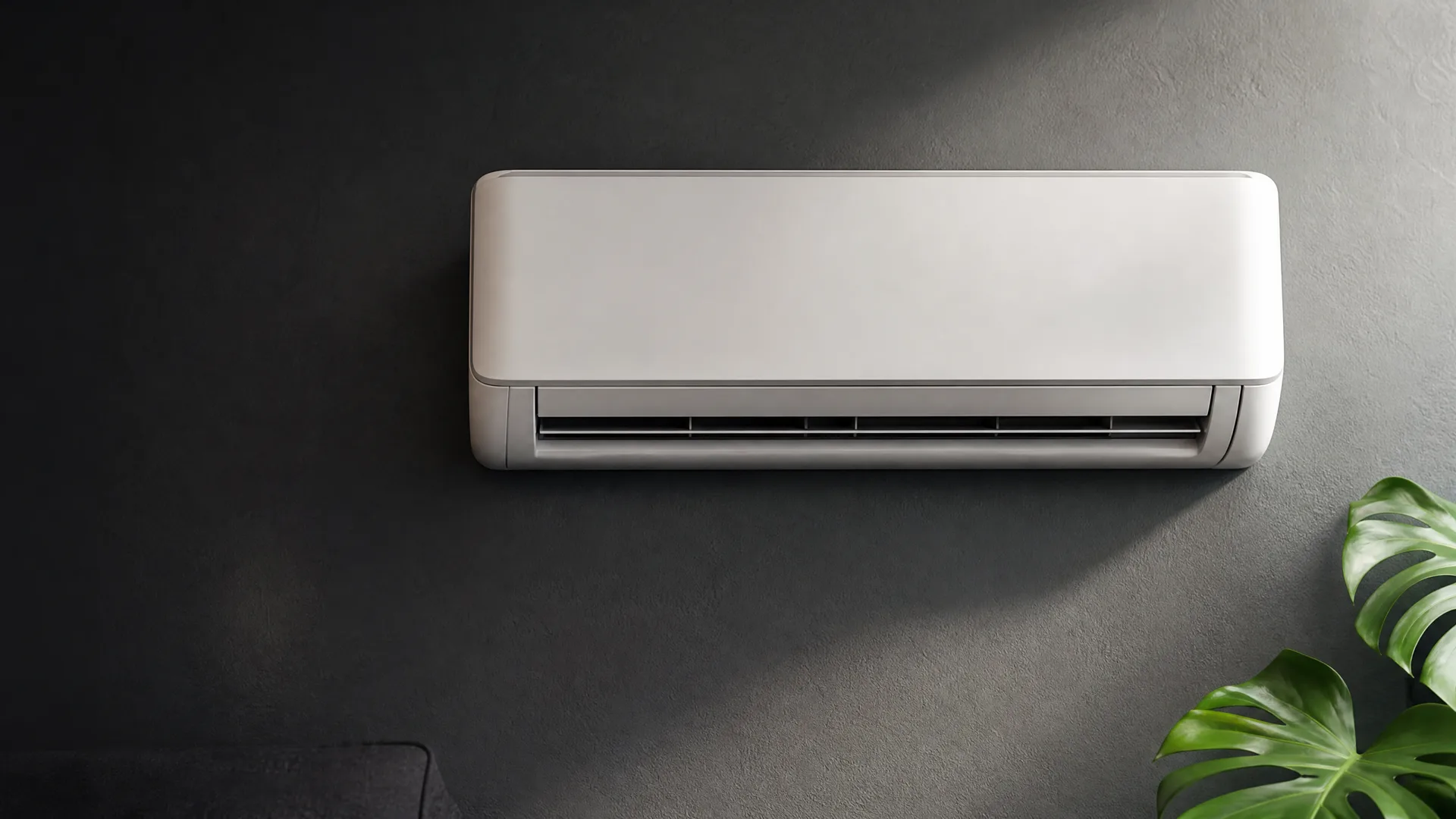
A white wall-mounted mini-split air conditioner on a dark grey textured wall, with a monstera plant leaf at the lower right corner.

The right pro for this job

Step 1 of 3: Equipment